
User-generated content (UGC) has become one of the best digital marketing strategies for building trust, community, and authenticity.
But just because (some) content created by your customers or even creators is public doesn’t mean it’s fair game. To reuse someone else’s content legally, you need usage rights first.
UGC usage rights are the permissions brands must get before featuring that content in ads, campaigns, websites, or social media platforms. And with tighter legal scrutiny, evolving platform rules, and growing concerns around privacy, getting proper permission is essential.
Brands are now expected to respect both the creator’s intellectual property and their control over how their content is used.
When handled the right way, UGC can increase performance across your marketing mix without crossing legal lines.
That’s why, in this guide, we’ll walk you through:
By the end, you’ll know how to legally and confidently work UGC into your marketing strategy without speculations or legal gray areas
User-generated content is any content created by real people instead of brands.
This works because 54% of consumers say they trust online reviews more than they trust recommendations from friends or family, company claims, or influencers.
You can have:
In both cases, UGC reflects genuine experiences, so it stands out as one of the most trusted and effective forms of modern marketing. People trust content from other people more than traditional ads, so UGC is a goldmine for social proof.
But before you repost or repurpose any social media posts, you need to understand how content ownership and usage rights apply.
Pro tip: UGC tools like Pixlee, Taggbox, and Bazaarvoice make it easier to discover and legally collect UGC at scale. For example, Taggbox has built-in rights-request features for platforms like Instagram and X, helping brands get permission fast and avoid copyright infringement. These tools also streamline content curation for branded hashtag campaigns.
Here’s how EmbedSocial works for UGC rights:
UGC can take many forms, such as:
Here’s a good example:
This content can come from everyday customers, niche creators, or even skilled professionals who make polished, platform-native videos. That diversity of sources blurs the line between organic and paid content. This is exactly why managing usage rights properly is so important.
We’re also seeing more AI-generated or AI-enhanced UGC entering the mix.
Tools like Runway and Luma AI let UGC creators produce realistic content that might involve your brand’s visuals. Since laws around AI content are still evolving, it’s extra important to tread carefully with permissions, privacy, and ownership.

UGC legally belongs to the person who created it. It is not owned by the brand or the platform it’s posted on. That simple fact drives everything around how UGC can (and can’t) be used, and it’s the foundation of all rights and permissions.
If you’re more of a visual learner, here’s a good video that explains different types of usage rights and why brands need them:
The moment someone creates and shares original content, they automatically own the copyright. There’s no need to file paperwork or register anything. It’s theirs by default.
Even if the post is public, the UGC creator keeps the exclusive right to control how it’s used. Just because it’s online doesn’t give brands permission to copy, share, or repurpose it.
That mistake is more common than you may think.
A MASV report details that 50% of creators report unauthorized use of their content, and the associated trust and legal consequences.
.webp)
When users post content on platforms like Instagram, TikTok, or Facebook, they still own that content. The platform typically gets a license to display or distribute it within its own ecosystem, but that license does not extend to brands wanting to reuse it elsewhere.
If a brand wants to feature that content in a campaign, product gallery, or ad, they need the creator’s explicit permission.
Besides, platforms like YouTube have specific rules against copyrighted content:
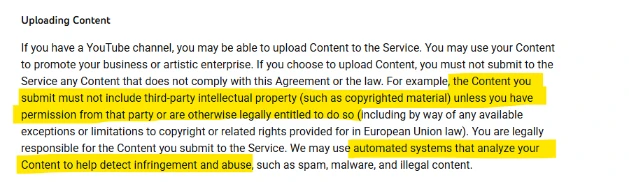
Creators can license or transfer rights through formal agreements (collaborations, ambassador programs, influencer contracts). These UGC contracts spell out exactly how the content can be used, for how long, and in what context.
But unless there’s a clear agreement in place:
Bottom line: If you’re building a marketing or e-commerce strategy that leans on UGC, treat it like any other piece of intellectual property. If you don’t have permission to use it, you don’t have the right to use it.
UGC usage rights should usually be granted for a fixed, clearly defined time period. In most cases, brands choose a range between six months and one year, depending on how and where the content will be used. Shorter timelines work well for social posts or limited campaigns, while longer terms make sense for evergreen ads or website use.
A defined time frame protects both sides. Brands know exactly how long they can use the content, and creators keep control over their work instead of losing it indefinitely. This clarity also makes renewals easier, since both parties can review performance before extending rights.
Granting unlimited or open-ended usage typically creates tension later, especially if the creator grows their audience or changes how they want their content used. Setting a clear end date keeps expectations aligned and reduces future disputes.
UGC usage rights usually cost an added percentage on top of the base content fee, rather than a flat price. For short-term use, such as running paid ads for a few weeks or months, usage rights add around 20-30% of the original content price. Longer agreements, like 12 months of use across ads and owned channels, raise that number to roughly 30-50%.
In most cases, brands pay extra based on how long the content will be used and where it will appear.
These costs exist because extended use increases the value the brand gets from the content. A post used once on social media is very different from an asset in paid campaigns or one that’s on a brand's website for a year. Clear pricing also helps creators feel fairly compensated for the ongoing exposure their work supports.
The key is aligning cost with scope. When pricing matches duration and placement, both sides avoid friction and future renegotiation.
Using customer photos, videos, reviews, or any type of UGC without proper permission can land your brand in legal, financial, and reputational trouble.
Securing usage rights keeps your marketing efforts on the right side of copyright, privacy, and content-use rules.
Creators own the rights to their content, and public visibility doesn’t equal consent, especially for commercial use.
Without proper clearance, you risk copyright violations, takedowns, legal fees, and reputational damage. This also applies to content featuring people, music, logos, or other protected elements.
For example, in February 2017, North Carolina photographer Kayla Kraft sued Anheuser-Busch for copyright infringement after the beer company allegedly lifted one of her registered photos from her Facebook page and used it in a retail marketing campaign across North Carolina, without permission.
Kraft had registered the photo with the U.S. Copyright Office, which strengthened her legal position. According to reports, the image (featuring a fake moustache theme) was used on point-of-sale and promotional materials for Anheuser-Busch products. She claimed the company did not license the photo, did not credit her, and did not compensate her for the commercial use.
To stay compliant, always secure clear usage rights before publishing UGC across any channel.
Asking for permission and being transparent about how content will be used shows respect and builds trust. Skipping this step can feel invasive and damage relationships.
Crediting creators properly and documenting approvals supports long-term partnerships and keeps your workflow consistent.
Responsible UGC use is part of a smart, long-term content strategy. When you build systems to secure rights, document permissions, and stay organized, you avoid the chaos of last-minute approvals or pulled content mid-campaign.
This is especially important as platforms continue to tighten rules around copyright, usage, and content visibility.
In short, securing UGC rights helps you stay compliant, protects your reputation, builds trust with creators, and keeps your UGC program scalable and sustainable.
Understanding usage rights helps you stay compliant and choose the correct license for every campaign. These are the most common types of usage rights that brands negotiate with creators when repurposing UGC.
This is the most common UGC license. The creator keeps full ownership and can still use the content however they want or license it to other brands.
You get permission to use the content, but you don’t get control over it.
With exclusive rights, only your brand can use the content for the duration of the agreement.
Creators cannot license, sell, or repurpose that content for anyone else. This type of license costs more because it limits the creator’s future earning potential.
These rights allow you to use the content forever unless the agreement says otherwise.
It sounds convenient, but many creators hesitate to grant it because they lose long-term control. It’s typically more expensive and should be used only when you truly need lifetime usage.
However, some creators don’t appreciate perpetual UGC rights too much:
Limited-use rights give your brand permission to use the content only under specific conditions, such as for one campaign, one platform, a short time period, or a single placement.
This keeps costs lower and protects the creator’s control, while giving you just enough flexibility to use the content where you need it most.
This license lets you use the content across your digital channels: social media, website, email, blogs, product pages, and digital placements.
It does not automatically include paid ads unless specified.
Paid media rights let you use UGC in advertising: Meta ads, TikTok Spark Ads, Google Display, YouTube, programmatic, etc.
This license usually has stricter time limits and higher fees because the content directly generates revenue for your brand.
This permits you to use the content on your organic social media channels: feed posts, Instagram Reels, Stories, Pinterest pins, YouTube community posts, etc.
It’s the simplest and least expensive license, but it doesn’t cover advertising or off-platform distribution.
Here’s a neat explanation:
When brands work with user-generated content, consent is not a detail you can gloss over. How permission is given affects where the content can appear, how long you can use it, and how safe your brand is from legal pushback.
In practice, consent usually falls into two main categories.
Explicit consent means clear, direct permission from the content creator. This usually happens through a DM, email, contract, or a short usage rights agreement that spells out how the content will be used.
For example, you might ask if the brand can run the post as a paid ad, feature it on a landing page, or reuse it across your social media channels.
This type of consent gives you the strongest protection. It also makes content approval simpler, since both sides know exactly what is allowed. That matters more than ever, because creators are paying close attention to how brands handle their work.
In fact, creators expect this level of clarity. 95% of creators say they expect brands to ask for permission before using their content. That alone shows why informal assumptions can quickly turn into brand reputation issues.
Implicit consent is more limited. It usually applies when someone joins a branded campaign or challenge with clear terms stating that their content may be shared. In most cases, this only covers light use, such as social media reposting on your own profiles.
This type of consent rarely includes paid ads, long-term use, or wider distribution across multiple platforms. It also does not support ideas like perpetual rights unless that is clearly stated upfront. Treat implicit consent as narrow by default, especially if the content becomes a core digital asset for the brand.
Best practice: Always get explicit consent when using organic UGC in any commercial or off-platform setting. It avoids confusion, keeps things legal, and shows respect for the creator’s work.
It’s also a good idea not to change the context.
Using someone’s post in a way that misrepresents their intent or implies endorsement without clear permission can damage trust and open you up to legal risk.
A top UGC agency can help you develop a content rights system to:
Treat UGC like the valuable (and protected) asset it is. That way, you can use it confidently, protect your brand, respect your creators, and still get all the marketing benefits UGC brings to the table.
These best practices help you run a rights-safe UGC program at scale.
Create a repeatable process so every UGC request follows the same steps. This keeps your team aligned and prevents mistakes.
A clean workflow usually includes:
When this runs smoothly, your brand avoids last-minute problems, conflicting terms, or forgotten permissions. Unfortunately, only 16% of brands have a dedicated UGC strategy, so they may face these difficulties.
Most legal issues happen because the brand team itself isn’t aligned on how they plan to use the content.
Before you contact the creator, clarify internally:
Creators appreciate clarity, and your legal team avoids reinvesting time in back-and-forth revisions.
Pro tip: You need a documented trail in case of disputes, claims, or takedown requests.
Keep:
Make them accessible to your legal, paid media, and social teams.
A surprising number of brands get in trouble by using a UGC asset after the agreed-upon timeframe.
Set up:
This keeps you from running ads with expired usage rights, which is a common liability from our experience.
If you plan to resize, crop, subtitle, or repurpose UGC for different placements, secure editing rights upfront.
This prevents disputes about:
UGC rights management is the behind-the-scenes system that keeps your use of user-generated content compliant and organized. Instead of treating UGC like bonus material, this approach treats it as a managed asset, ensuring it meets copyright, privacy, and IP standards across your entire content strategy.
To prevent missteps or unauthorized reuse, brands need a centralized place to track:
A single, searchable database gives marketing, legal, social, and e-commerce teams instant clarity on what’s cleared and what’s off-limits. It also creates a reliable audit trail, making it easy to respond to creator requests, manage expired rights, and stay compliant.
As your UGC library grows, having structured, accessible records is essential.
Manually handling permissions doesn’t scale. Automation helps by:
For teams managing lots of content across multiple channels, automation reduces human error and keeps everything running smoothly.
UGC rights impact marketing, legal, creative, and compliance teams. That’s why it’s important to align everyone with clear policies and tools.
Make sure to:
As brands scale their use of user-generated content, managing rights, moderation, and distribution quickly becomes too complex to handle manually. That’s where UGC management platforms come in.
These tools help you discover, organize, secure permissions for, and publish UGC at scale, turning customer photos, videos, and reviews into ready-to-use, rights-safe marketing assets.
Popular platforms like Taggbox, Pixlee TurnTo, Bazaarvoice, Flowbox, Yotpo, and Juicer.io each offer different strengths depending on your volume, channels, and use case.
When selecting a UGC platform, especially for rights compliance, look for the following features:
UGC can be hard to manage, especially once multiple teams start using the same assets across social, ads, and web pages. A UGC management platform helps you keep permissions, files, and workflows in one place, so you can move more quickly without risking mistakes.
Here’s what the right platform helps you do.
A good UGC management platform helps brands stay on the safe side of usage rights. Built-in approval flows, permission logs, and usage records make it easier to prove consent if questions come up later.
This structure lowers the risk of copyright or privacy issues and helps teams avoid costly mistakes that usually happen when approvals can only be found in inboxes or chat threads.
UGC adds up fast, and without a system, files end up scattered across drives, folders, and spreadsheets. A centralized library keeps every asset, approval, and note in one place. This makes it easier for legal, social, and paid teams to find what they need without guessing which version is cleared.
Platforms remove friction from the UGC process. Instead of jumping between tools, teams can move from finding content to requesting rights and publishing much faster. That speed will benefit you when trends are changing quickly or when a post is performing well and needs to be used while momentum is still there.
Quality control is easier when platforms include filters and review steps. These tools help teams approve only content that fits brand guidelines and campaign goals.
And this matters because visual UGC performs well with audiences. Research shows that 81% of marketers say visual UGC connects better with customers than professional photos or influencer content, which explains why tighter selection can lift results.
UGC platforms make it simpler to publish across the web, social, email, and paid ads without breaking usage terms. Rights stay attached to the asset, so teams know where content can and cannot go. This reduces internal friction and keeps campaigns moving without second-guessing permissions.
Most platforms include performance tracking that shows which UGC formats and themes work best. This data helps brands adjust what they ask for and how they use it. And when UGC runs alongside brand content, engagement rises by about 28%, which shows why smarter mixing leads to stronger results.
UGC intellectual property problems usually come from small gaps in the process. A clear system, shared across teams, helps brands use creator content with confidence while avoiding legal and trust issues.
Here are the most common pitfalls and how to handle them.
One of the biggest mistakes is thinking a repost approval covers everything. Permission to share on social does not automatically allow paid ads, website use, or long-term campaigns. Always confirm where the content will appear and how long it will stay live before using it elsewhere.
Verbal agreements or emoji replies leave too much room for debate later. Without written proof, brands struggle to defend usage if a creator changes their mind. Keep clear written approvals so there is no confusion about what was allowed.
Removing audio, adding text, or reframing clips may change the creator’s original message. Ask for editing permission upfront and stick to the agreed context.
UGC typically stays live longer than planned. Without tracking timelines, brands may keep content active after rights expire. Set reminders and review usage regularly to avoid accidental misuse.
Rights information should not be entrusted to one person or team. Legal, social, and paid teams all need access to approvals and usage details. Shared visibility reduces mistakes during fast-moving campaigns.
When brands handle UGC usage rights well, it can lead to better performance, lower costs, and content that keeps working for you.
Below are a few examples where clear usage rights made UGC a real growth lever.
Genomelink built a continuous UGC system with full paid usage rights from day one. This allowed the brand to reuse creator content across paid social without delays or legal friction.
Result: CAC dropped by 73%, registration completion rose by 124%, and cost per registration fell by 27%.
Native secured clear, flexible rights for creator content across multiple drops and regions. That made it easy to reuse UGC across ads, markets, and launches without re-negotiating each time.
Result: Over 1000 UGC assets produced, hitting 200% of content targets and supporting four international campaigns.
Hurom treated UGC as a performance asset rather than a one-off post. With proper usage rights, top-performing creator videos were reused and optimized across paid channels.
Result: CPA dropped by 60%, ROAS almost tripled, and customer value increased by 150%.
Greenpark locked in paid usage rights for TikTok-first creator ads. This allowed fast testing and scaling. Winning assets stayed live longer instead of being replaced too soon.
Result: CPI fell by 70%, daily installs grew 6x, and ad spend scaled by 300%.
How you treat creators and their content directly impacts your brand’s reputation, customer trust, and ability to build long-term relationships.
Ethical UGC practices build goodwill. Unethical use can spark backlash, erode credibility, and even lead to public complaints.
When a creator shares a photo, video, or review, it usually comes with a certain tone or message. If your brand repurposes that content, it’s important to preserve that original intent.
Avoid edits like cropping, adding text overlays, or changing the tone. That could distort what the creator meant or make it look like they’re endorsing something they didn’t agree to. Treat their content with the same care and respect you’d give to agency-produced assets.
If you do need to make changes for marketing purposes, ask for permission first. Be transparent about what you're altering and why. This not only shows respect for their work but also keeps communication clear and authentic.
Misrepresenting UGC, whether by tweaking the message, removing context, or implying a false endorsement, can quickly damage both trust and credibility.
Don’t:
Be clear and honest about where the content came from and whether the creator was compensated. Authenticity is what makes UGC powerful, so don’t compromise it.
UGC is powerful, but only when you use it responsibly. By securing clear usage rights, tracking approvals, and respecting creator ownership, you protect your brand while building stronger relationships with your community. With the right systems in place, UGC becomes a scalable, compliant engine for trust and performance.
When teams treat permissions and approvals as part of the process UGC becomes easier to scale without friction. That approach keeps campaigns moving fast while protecting brand trust and long-term credibility.
If you want expert help sourcing, managing, and repurposing UGC at scale, inBeat Agency can build a rights-safe, high-performing UGC program for your brand.
UGC usage rights are the permissions a brand needs to legally reuse content created by someone else. These rights outline how and where the content can appear across social media, websites, ads, or other channels. They exist to keep brands aligned with copyright laws, intellectual property rights, and platform-specific legal frameworks that protect the original creator.
Yes. Even if the content is public, fair use rarely applies to commercial content creation or marketing. Brands must secure explicit permission or a usage license to avoid violating copyright laws or privacy rules. Public visibility does not grant automatic rights, especially when the content will be repurposed in paid ads or cross-channel campaigns.
The creator remains the copyright owner of their content, even when it tags your brand or appears on a public platform. Social platforms host the content and may license it internally, but they do not transfer ownership to brands.
Reach out directly via direct message, email, or a rights-request form and clearly explain where and how the content will be used. Written consent gives you the strongest legal protection and ensures both parties understand the usage terms.
A solid UGC contract should cover: what content is being used, where it will appear, how long it’s valid, whether edits are allowed, if it’s paid or unpaid, how the creator will be credited, and what happens if terms change or are broken.
It means the brand can use the content for six months starting from the agreed date. After that period ends, the content must be removed unless the rights are renewed.
No. Usage rights allow a brand to use the content in specific ways, while copyright stays with the creator unless it is transferred in writing.
It is a section in a contract that explains where, how, and for how long the content can be used. It also states whether edits, ads, or reuse across channels are allowed.
Usage rights are usually priced as a percentage added to the base content fee. The final cost depends on duration, placement, and whether the content runs as ads or organic posts.
Coca-Cola's “Share a Coke” campaign is a strong example. Coca-Cola invited people to post photos using #ShareACoke and then reused that content in marketing, based on clear campaign terms that allowed brand use.
